
What Is KYC, and Why Does It Matter?
Know Your Customer (KYC) is the process of confirming that the people signing up for your product are who they claim to be — before you let them move money, place bets, rent a car, or open an account. It is the front door of every regulated business, and increasingly of unregulated ones that simply do not want fraud.
At its core, KYC answers three questions:
- Is this a real, valid identity document?
- Does the person presenting it match the document?
- Is this person someone you are allowed to do business with?
Why regulators require it
KYC exists because anonymous financial access is how money laundering, terrorist financing, and large-scale fraud happen. Frameworks like the EU's AML directives, the US Bank Secrecy Act, and FATF's global recommendations push the obligation onto the businesses themselves: if you onboard a customer, you are expected to know who they are and to screen them against sanctions and politically-exposed-person (PEP) lists.
Note
KYC is not only a banking concern. Marketplaces, gaming operators, telecoms, mobility platforms, and healthcare providers all run some form of identity check — the rules differ, but the building blocks are the same.
The three building blocks
Modern KYC is usually assembled from three checks:
- Document verification (OCR + authentication). Read the data off a passport, driver's license, or national ID, and confirm the document itself is genuine — not a Photoshop job, a screen recapture, or a known fake template.
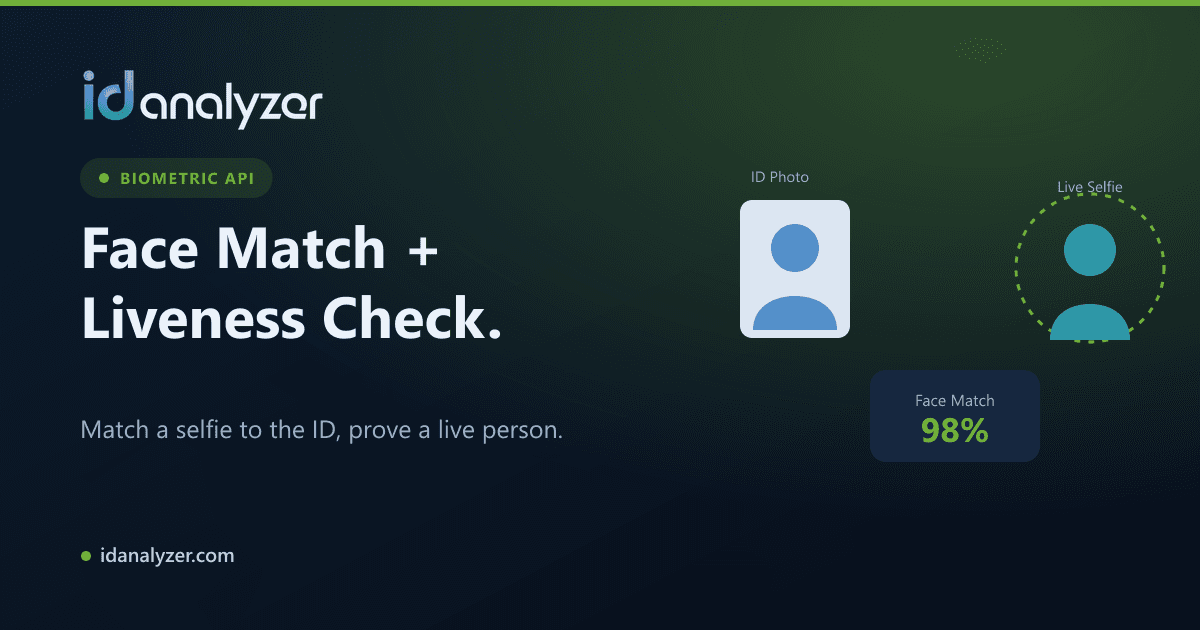
- Biometric verification. Match a live selfie to the photo on the document, and prove the selfie is a real, present person rather than a mask or a replayed video (liveness detection).
- Watchlist screening. Check the verified identity against sanctions lists, PEP databases, and adverse-media sources.
Historically, teams bought each of these from a different vendor and spent weeks gluing them together — with three audit trails that never quite lined up.
How teams automate it today
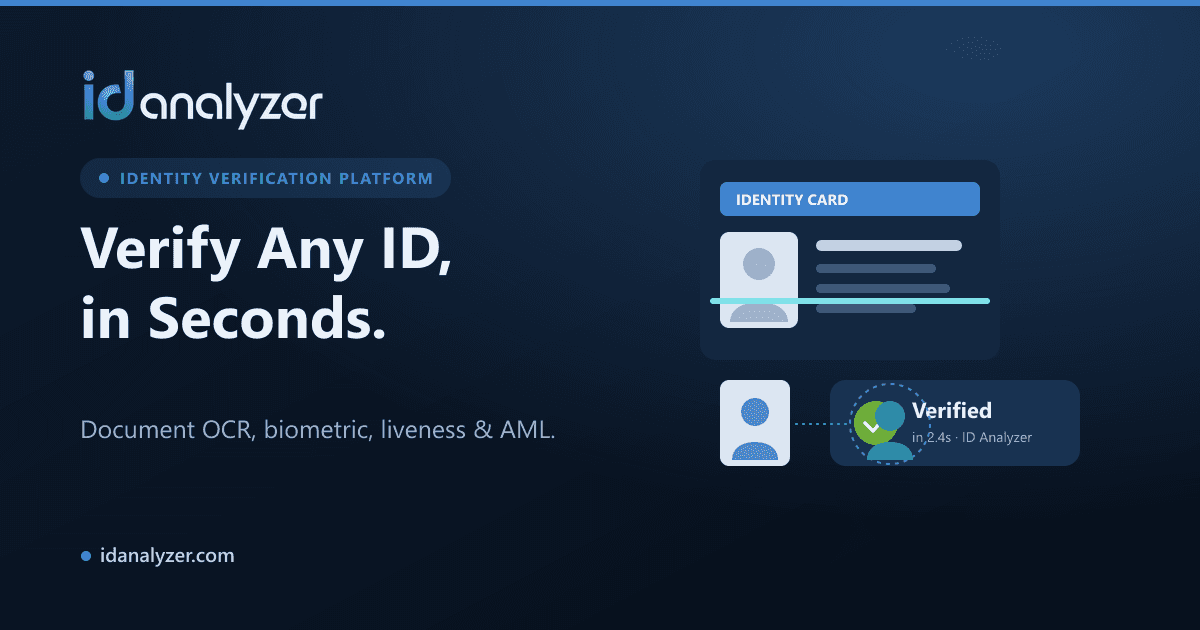
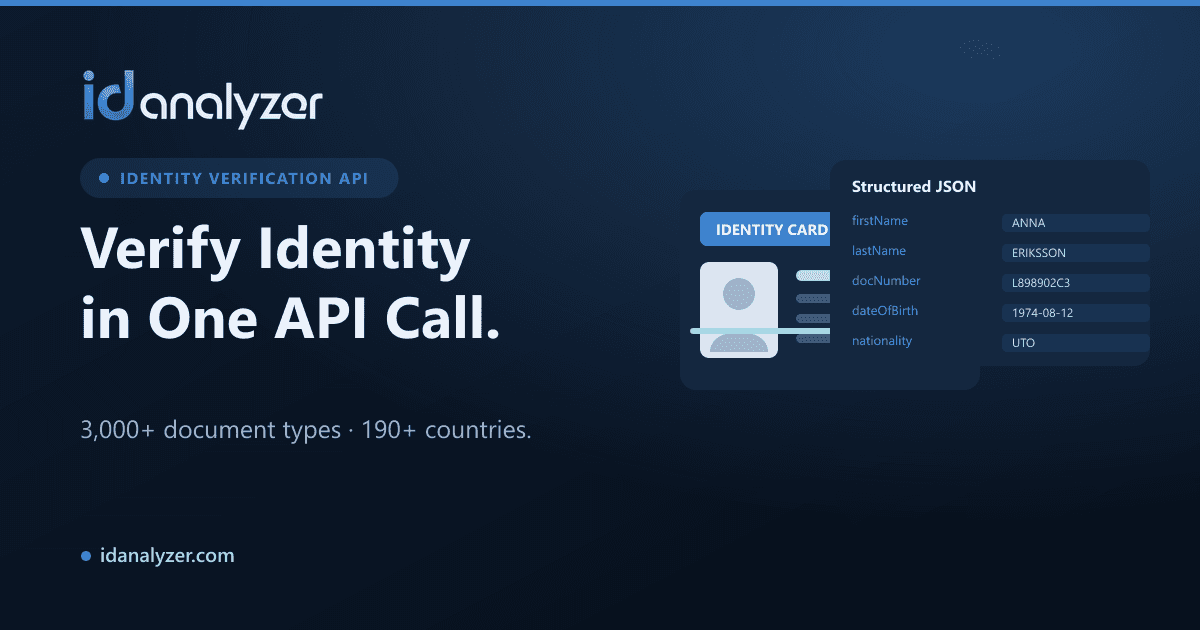
The shift over the last few years has been from manual review to real-time, API-driven decisions. Instead of a human eyeballing a scanned ID, an applicant uploads a document and a selfie, and a single API returns structured JSON: the extracted fields, an authenticity verdict, a face-match score, a liveness result, and any watchlist hits — in seconds.
That is exactly the shape ID Analyzer is built around: document OCR, biometric match, liveness, fraud signals, and AML/PEP screening behind one call, with a tamper-evident record you can replay for an auditor later.
Getting KYC right without killing conversion
The tension every product team feels is friction vs. fraud. Too little verification and bad actors walk in; too much and good customers abandon signup. The way out is not to verify less — it is to verify faster and smarter:
- Run checks in real time so users are not left waiting.
- Only escalate to manual review when a signal is genuinely ambiguous.
- Use a single, consistent decision so support and compliance see the same record.
KYC done well is almost invisible to the honest customer and a brick wall to the fraudulent one. That is the bar worth aiming for.