

Deepfakes, Photo Substitution and Document Fraud: A Practical Defense Guide
Identity fraud used to mean a blurry photocopy and a crossed-fingers submission. Today it means AI-generated faces, pixel-perfect photo swaps, and template-based document forgery that can pass a quick human glance. If your onboarding flow only checks whether a document "looks real," you are exposed on three different fronts at once.
This post breaks down the three attack types, how they overlap, and the layered controls that actually catch them.
The three attack surfaces
1. Deepfakes and synthetic faces
Deepfakes target the biometric step. Instead of showing a real face to the camera, an attacker injects or presents a generated or manipulated video — a face swap over their own, a fully synthetic person, or a replayed recording of a legitimate user.
The goal is to defeat face match and liveness. A static selfie check is trivial to beat with a printed photo or a screen. A naive video check can be fooled by a replayed clip. Deepfakes raise the bar further because the "person" never existed or was never there.
2. Photo substitution
Photo substitution attacks the document itself. The fraudster takes a genuine (often stolen) ID and replaces the portrait with their own — or replaces it with a synthetic face so the document and the selfie match each other but belong to no real identity.
This is dangerous precisely because the document can be authentic in every other respect: real stock, real security features, valid number format. Only the portrait is wrong.
3. Document forgery
Classic forgery covers everything from editing a date of birth in Photoshop to printing a full template from a dark-web kit. Modern kits reproduce holograms, fonts, and layouts convincingly enough to pass visual review, and they can generate valid-looking MRZ and barcode data.
Heads up
These attacks are usually combined. A single fraudulent onboarding can involve a forged document, a substituted portrait, and a deepfake selfie — each designed to pass a different check. Defeating one layer is not enough.
Why single-point checks fail
A document-only check misses the deepfake. A selfie-only check misses the forged document. A face match that compares the selfie to the document portrait is satisfied even when both images are fake, as long as they match each other.
The weakness is treating each check as independent. Fraud operations exploit exactly that gap — they engineer consistency across the artifacts they control.
A layered defense
Catching combined fraud means running independent checks that are hard to satisfy simultaneously.
Read the document correctly
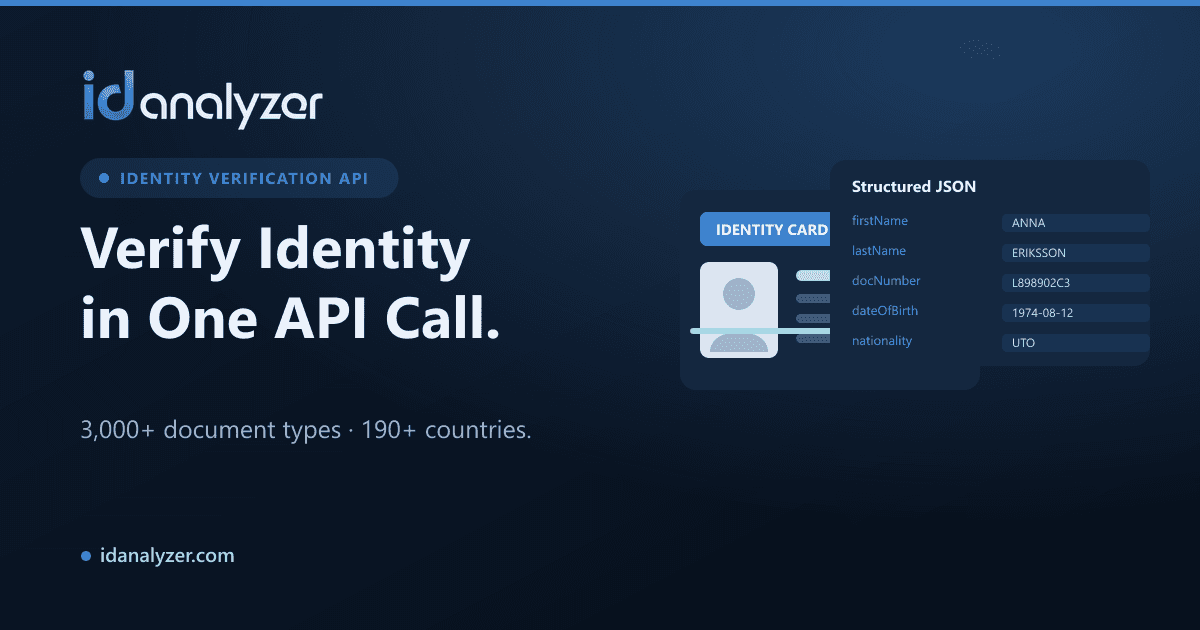
Start with reliable OCR, plus MRZ and barcode parsing. Cross-checking the printed text against the MRZ and barcode data exposes tampering: if someone edited the visible date of birth but left the MRZ untouched, the mismatch is immediate. Supporting a broad range of formats matters here — ID Analyzer covers 3,000+ document types across 190+ countries, so you are validating against the real spec, not a guess.
Authenticate the document
Document authentication inspects security features, fonts, layout, printing patterns, and known anti-forgery markers. This is what flags template-based forgeries and altered stock that OCR alone would happily read.
Detect photo substitution
Portrait tampering leaves traces — inconsistent compression, edge artifacts, lighting that does not match the surrounding document. Authentication and anti-forgery analysis target these signals, catching a swapped portrait even on otherwise genuine stock.
Verify the person is real and present
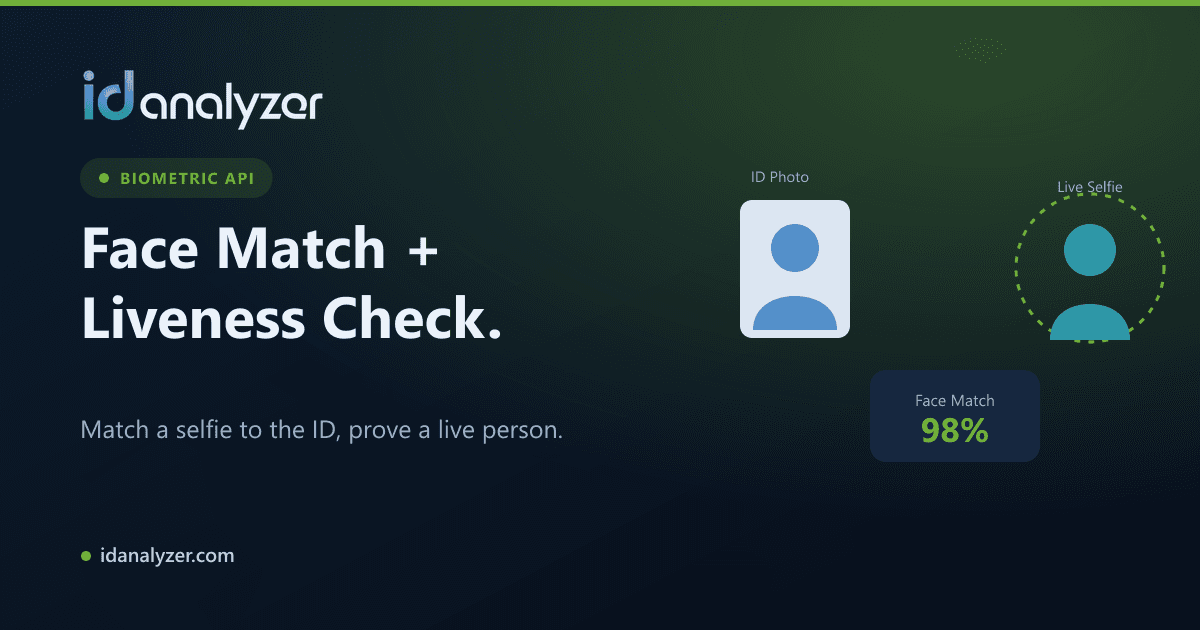
This is the deepfake defense. Biometric face match confirms the selfie matches the document portrait, while liveness detection confirms a real, present human — not a screen, a print, or an injected deepfake stream.
The combination is what breaks the attack chain. A deepfake might pass liveness in isolation on a weak system, but it still has to match an authenticated document whose portrait has not been substituted and whose data is internally consistent.
Screen the identity
A technically valid document still belongs to a real person who may be sanctioned or politically exposed. AML, PEP and criminal-records screening adds a risk layer independent of document and biometric checks, so a clean document does not automatically mean a clean customer.
Practical implementation notes
- Chain the checks, then correlate. Don't just collect pass/fail flags — look for inconsistencies across layers. Consistent artifacts are a red flag in themselves.
- Capture quality is a control, not a formality. Blurry images hide tampering and degrade liveness. Enforce minimum capture standards on the client side.
- Tune thresholds to risk. A high-value account opening warrants stricter liveness and authentication thresholds than a low-risk re-verification.
- Keep an audit trail. Store check results and evidence so compliance teams can review decisions. For data-residency or sensitive deployments, ID Fort supports on-premise processing, and ID Analyzer operates under ISO 27001.
Note
No single signal is decisive. Treat each check as a vote and define how many — and which — must pass before you approve, refer, or reject.
The takeaway
Deepfakes, photo substitution and forgery are three separate problems that attackers deliberately bundle. The defense is not a bigger version of any one check — it is independent layers that are hard to satisfy at the same time: accurate OCR and data cross-checks, document authentication, portrait-tampering detection, biometric match with liveness, and risk screening on top.
Build the chain, correlate the results, and the combined attack has nowhere left to hide.