

Deepfakes, Photo Substitution, and Document Fraud: What Modern KYC Has to Catch
Fraudsters no longer need a print shop and a laminator to fake an identity. They need a stolen ID photo, a face-swap model, and a webcam. The result is a class of attacks that look convincing to a human reviewer but leave signals that a well-built verification pipeline can still detect.
This post breaks down three overlapping threats—deepfakes, photo substitution, and document forgery—and how a layered verification stack addresses each one.
The three attack types
These threats often get lumped together, but they hit different parts of the verification flow.
Deepfakes
A deepfake is synthetic or manipulated media used to impersonate a real person during a liveness or selfie check. In a KYC context this usually means:
- A face-swapped video feed injected into the camera stream.
- A pre-recorded or AI-generated video replayed to pass a "move your head" prompt.
- A synthetic face generated to match a stolen document photo.
The goal is to defeat the biometric step—to convince the system that a live, present person matches the ID being submitted.
Photo substitution
Photo substitution attacks the document itself. The attacker takes a genuine or template document and swaps the portrait for someone else's face—often the fraudster's own, so the selfie match still passes. Done well, the substituted photo lines up with the document layout, and a casual reviewer sees a "matching" face and waves it through.
Document forgery
Broader document fraud includes altered data fields, cloned templates, fake security features, and fully counterfeit documents. Photo substitution is one form; others include changed dates of birth, edited names, or manipulated MRZ and barcode data that no longer matches the printed text.
Heads up
No single check catches all three. A biometric-only system misses forged documents; a document-only system misses injected deepfakes. Layering is not optional.
Why manual review isn't enough
Human reviewers are good at spotting obviously bad fakes and terrible at spotting good ones. Photo substitution that respects the document's layout, and deepfakes rendered at webcam resolution, are specifically designed to survive a glance. Reviewers also fatigue, vary in skill, and can't consistently cross-check an MRZ against printed fields or measure micro-inconsistencies in a face crop.
Automated verification is consistent, fast, and checks signals humans can't perceive at all.
The layered defenses
Here's how each attack maps to a concrete verification control.
Document authentication against forgery
Document authentication inspects the physical and structural integrity of an ID, not just the text on it. Checks include:
- Anti-forgery and tampering analysis to flag edited fields and cloned templates.
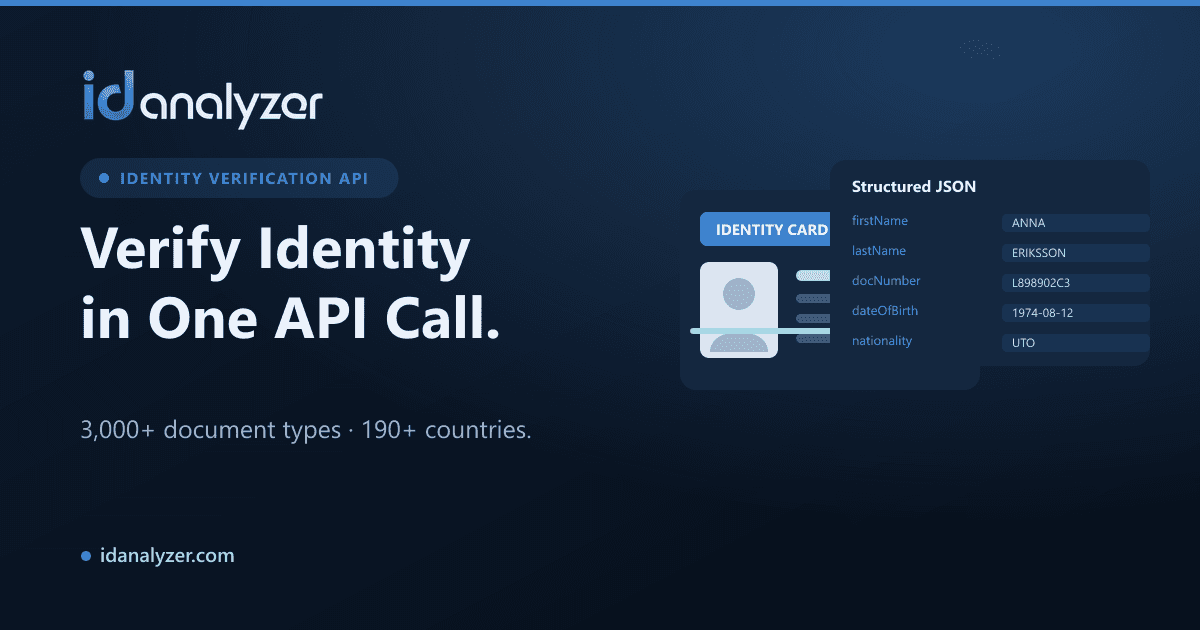
- MRZ and barcode reading cross-referenced against the visual (printed) data. If the machine-readable zone says one birth date and the printed field says another, that's a red flag.
- Format validation against known specifications across 3,000+ document types from 190+ countries, so a document that doesn't match its own template is caught.
This layer is where most photo substitution and data-manipulation attempts break down, because altering one part of a document rarely leaves every other part consistent.
Biometric face match against photo substitution
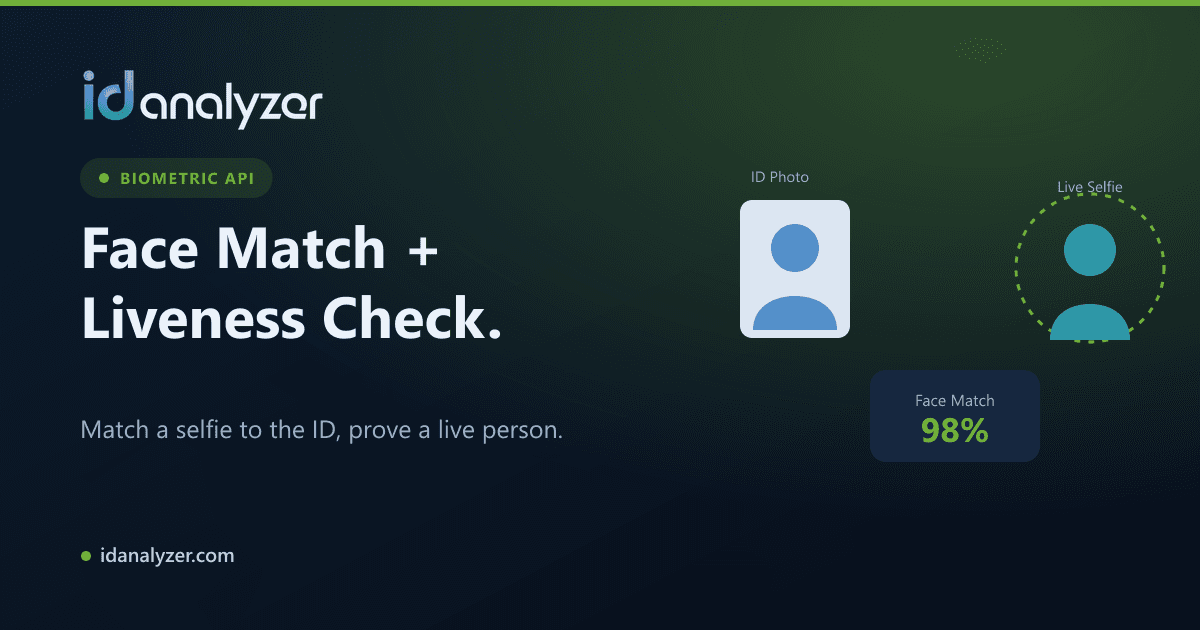
Document OCR extracts the portrait; biometric face match compares it to the live selfie. This catches the simplest substitution: an attacker using someone else's stolen document without also replacing the photo. The face won't match, and the check fails.
Because substitution can be paired with a matching selfie, face match alone isn't sufficient—which is why it runs alongside document authentication, not instead of it.
Liveness detection against deepfakes
Liveness is the primary control against deepfakes and replay attacks. Instead of asking "does this face match?", it asks "is this a real, present human?" Liveness signals help distinguish a live capture from a screen replay, a printed photo, or an injected synthetic feed.
Combined with biometric matching, liveness ensures that the person passing the selfie step is both present and the same person shown on the authenticated document.
AML and PEP screening for the identity behind the ID
Even a genuine, verified identity can be a compliance risk. Screening the verified name against AML, PEP, and criminal-record watchlists closes the loop between "this person is real" and "this person is allowed to onboard."
Putting it together in a pipeline
A resilient flow chains the controls so each attack type meets a matching defense:
- Capture and OCR the document; read MRZ and barcode data.
- Authenticate the document—tampering, template, and cross-field consistency checks.
- Match the extracted portrait to a live selfie.
- Verify liveness to rule out deepfakes and replays.
- Screen the confirmed identity against AML/PEP and criminal databases.
A fraudster now has to defeat every stage: forge a document that passes structural checks, substitute a photo that still matches a face, and present that face through a liveness check without triggering deepfake signals. Each additional layer raises the cost of the attack.
Deployment and compliance notes
For teams with data-residency or sovereignty requirements, verification doesn't have to live in the cloud. On-premise deployment via ID Fort keeps document images and biometric data inside your own infrastructure. Across deployment models, ISO 27001 practices govern how identity data is handled.
Takeaway
Deepfakes, photo substitution, and forged documents are distinct attacks that exploit distinct weaknesses. Defeating them isn't about one clever detector—it's about layering document authentication, biometric match, liveness, and screening so that beating one control still leaves the others standing. Build the pipeline so the fraudster has to win every round.