

Keeping Up With New ID Designs: How Document Coverage Is Maintained When Countries Reissue Passports and Driver Licenses
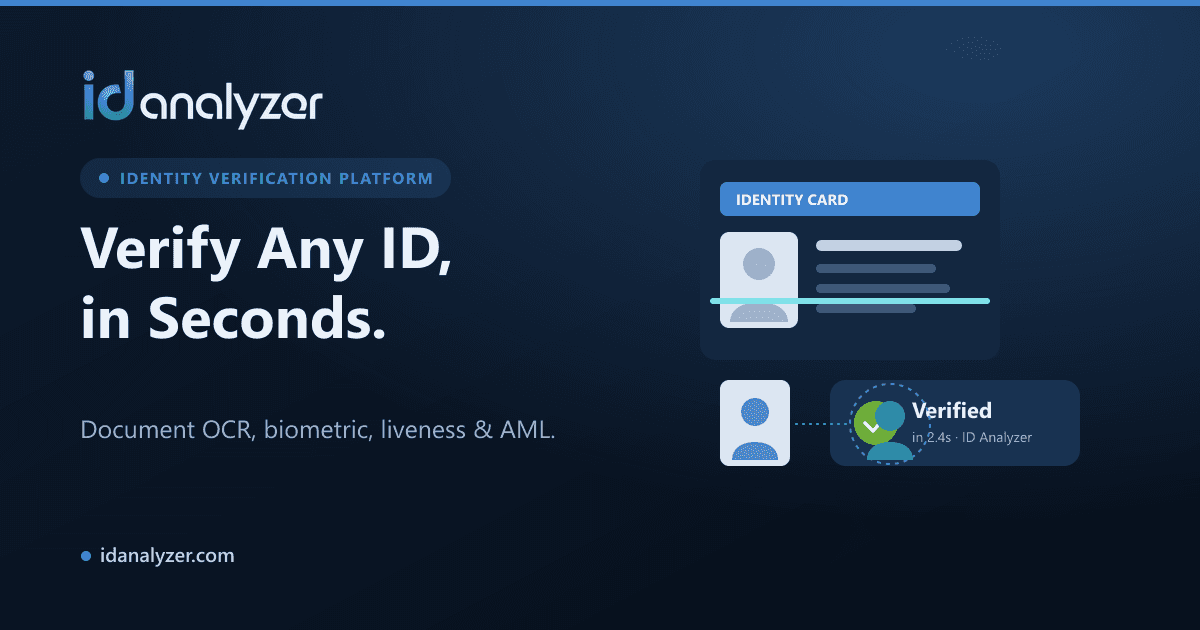
Identity documents change over time. Countries add new security features and move from laminated cards to polycarbonate. They adopt new data standards, add chips, and update layouts to meet new regulations. Many of these documents stay in circulation for five to ten years, so a verification system never deals with just one version of a document. It has to handle several versions at once.
This post covers what changes in a redesign, why that matters for OCR and authentication, and how developers and compliance teams can design their workflows so a new ID design does not quietly break onboarding.
What Actually Changes When a Document Is Redesigned
A redesign can be cosmetic or structural. It helps to know which kind you are dealing with.
Layout and field placement
The name, date of birth, document number, and expiry date may move to new positions. They may get new labels or appear in a different language order. A template-based OCR engine that expects the old positions can misread fields or miss them entirely.
Security features
New designs often bring new holograms, optically variable inks, microprinting, guilloche patterns, laser-engraved photos, or transparent windows. Document authentication compares a submitted image against known genuine features. A new design needs a new reference before those checks can run with confidence.
Machine-readable data
Passports and many ID cards carry an ICAO-compliant MRZ. This is one of the most stable elements across redesigns, because the format is standardized. North American driver licenses carry a PDF417 barcode. The barcode can change between AAMVA standard versions and jurisdiction-specific implementations, which affects field codes and optional data elements.
Material and photo characteristics
A move from paper or laminate to polycarbonate changes how the document reflects light and how the portrait looks. This can affect image quality checks, face extraction, and the biometric face match step that follows.
The Overlap Period Is the Real Challenge
When a country issues a new design, the old one rarely becomes invalid overnight. Holders keep the previous version until it expires or is replaced. For a while, which can last years, a verification system will see:
- The previous design, still valid
- The new design, freshly issued
- Sometimes interim or transitional versions
- Older designs that are expired but still submitted by users who don't realize it
Coverage is not a question of "do you support Country X's driver license?" The better question is "which versions of Country X's driver license do you support, and how are new ones handled?"
Note
A verification platform's document library is a living dataset. Coverage across 3,000+ document formats and 190+ countries means tracking multiple versions per document type, not one template per country.
How Coverage Is Maintained
Keeping a document library current is ongoing work. In general, it involves a few activities.
Tracking issuer announcements. Governments usually announce new designs before or at launch. Specimen images and published feature descriptions give an early reference point.
Building templates and references for the new version. OCR needs to know where fields sit and how they are labeled. Authentication needs reference data for the new security features and layout so it can tell a genuine new document from a forgery.
Relying on standards where possible. MRZ and barcode data give a structured, version-tolerant path to core identity fields. Even before a new visual layout is fully characterized, standardized machine-readable zones often still yield reliable data. Cross-checking that data against the visual zone remains possible once the template exists.
Keeping previous versions active. Older designs stay supported for as long as they can still be valid, so users carrying legitimate older documents are not turned away.
What Your Integration Should Do
Even with a well-maintained document library, your own workflow decides how smoothly a redesign is absorbed. Several practical choices make a difference.
Don't hardcode document versions
Avoid client-side logic that assumes a fixed layout, a fixed set of returned fields, or a specific document version string. Treat the document type and version returned by the API as data. Don't treat them as a contract that never changes.
Handle "unrecognized" as its own outcome
A document that cannot be matched to a known template is not automatically fraudulent. It might be a brand-new design. Route these cases to manual review or a retry flow instead of a hard reject. Hard rejects lose legitimate customers right after a rollout.
Monitor results by issuing country and document type
If you log the issuing country and document type for each verification, you can spot a pattern. A sudden rise in unrecognized documents or authentication warnings from one country often signals a new design in the field. This gives your compliance team early warning instead of a support-ticket surprise.
Use machine-readable data as a fallback signal
Where a document carries an MRZ or PDF417 barcode, the extracted data can support a manual reviewer's decision while visual-zone coverage catches up. Combined with a biometric face match and liveness check, this keeps the overall assurance level reasonable for edge cases.
Keep your compliance policy version-aware
Your internal policy should say what happens when a valid but newly issued document cannot be fully authenticated automatically. It should cover who reviews it, what evidence is needed, and how the decision is recorded. Writing this down before it happens avoids inconsistent ad-hoc decisions.
Questions to Ask Your Verification Vendor
When you assess how a provider handles redesigns, ask:
- How are new document versions added, and how are customers informed?
- Are previous versions kept active while they remain valid?
- What does the API return when a document is not recognized?
- Can authentication and OCR run independently, so data extraction still works if a feature check is inconclusive?
- If you run on-premise, how do document library updates reach your deployment?
The last point matters for teams using a self-hosted deployment such as ID Fort. Updating the document library should be part of your regular patching process, not an afterthought.
The Bottom Line
New ID designs are routine, not exceptional. A robust setup combines two things. The first is a verification platform that maintains multiple document versions across countries. The second is an integration that treats unrecognized documents as a review case, watches for regional shifts, and doesn't depend on fixed layouts. With both in place, a country's passport or license redesign becomes a non-event for your customers.